 伴忆AIBANIVIA
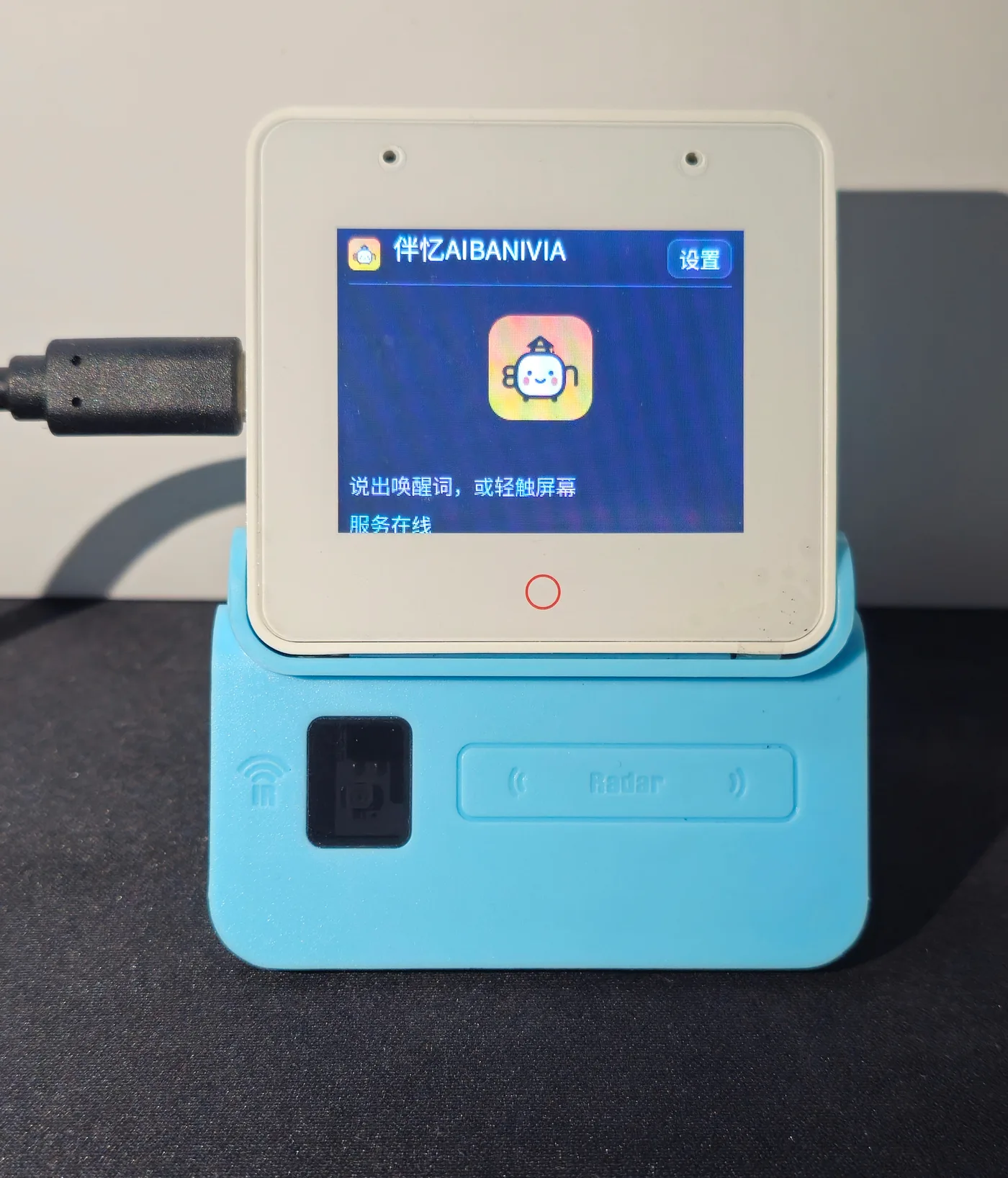
We connected AIBANIVIA to an Espressif ESP32-S3-BOX-3 desktop voice terminal. You can speak to the device and hear it answer. Our next step is to let it notice when a room has been warm for a while and suggest that the user turn on the air conditioner. If the user later authorizes it to act, what should it say: “I sent the command,” or “The air conditioner is on”?
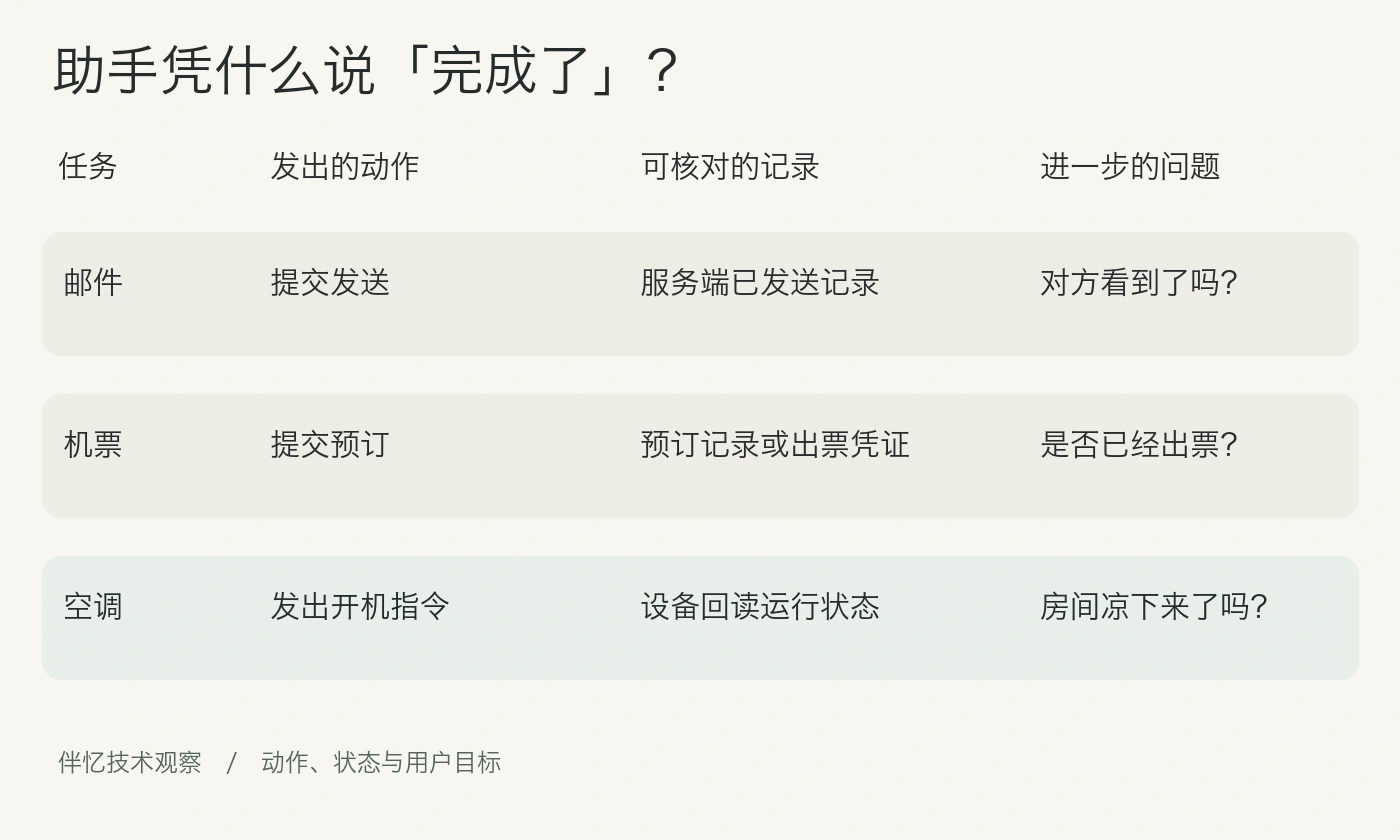
That difference matters. Remembering preferences, understanding intent, and calling tools are only part of the job. In the physical world, an assistant also has to judge how reliable its observations are, who may authorize an action, and what evidence shows that the action worked.
In What Is a Personal Agent?, we described personal assistance in terms of continuity, action, and user control. Shopping, email, and ticket booking are useful examples, not the boundaries. A hot study, a finished wash, or an offline appliance might not start with a conversation at all. The first challenge may be deciding whether to speak up.
01Three ways an assistant can act on a phone
To send an afternoon schedule to a colleague, an assistant might operate a mail app as a person would. That works with existing interfaces, but a redesigned screen, a popup, or a different account can change what the same click means. Apps can also expose structured actions. Apple App Intents lets developers describe actions and their inputs for system experiences such as Siri and Shortcuts; the available actions depend on what the app exposes.[1]
A third approach is to call a service API. Gmail separates creating a draft from sending it. A product can prepare the draft, let the user check the recipients, and show the sent message record afterward. That record supports “sent,” not “the recipient has read it.”[2]
The same distinction matters in shopping and travel. Shopify returns a checkout link when a cart is created; that is not a completed purchase.[3] Amadeus Self-Service separates searching, checking price and availability, booking, and managing the booking. Ticket issuance is a separate step.[4] Remembering that someone prefers a window seat does not tell you whether they have a ticket.
02Beyond the screen, check what happened
An infrared transmitter can log when it sent an air-conditioning command, even if the signal did not reach the appliance. A device that reports its state can provide stronger evidence that it is running. Whether the room cooled requires another measurement, and a drop in temperature might have another cause. The action, the resulting change, and the user's comfort are different outcomes.
IoT provides the sensing and control paths. Edge AI can handle tasks such as wake-word detection near the source. The personal assistant decides whether an event is relevant and whether it warrants an interruption. A local rule can detect sustained high temperature without sending every sensor reading to a language model. Espressif's SENSOR dock provides temperature and humidity sensing, presence radar, and infrared transmission and reception.[5]
Presence is not identity. A generic prompt may be appropriate when a guest is in the room; using the owner's private preferences requires a stronger basis. Devices can handle observations, timestamps, physical mute, and basic offline behavior. A phone or gateway can manage pairing and authorization. Knowing a preference is not the same as having permission to act on it.
03Cars, drones, and robots have different responsibilities
A phone assistant might check a ticket and, with authorization, pass the correct terminal to in-car navigation. It can explain a terminal change; the car still decides what can safely appear on screen while driving and retains control of steering and braking.[6]
For an orchard survey, a grower might ask for better images of a row missed yesterday. An assistant can track the gap and present the new images for review. A completed flight, saved photos, and images that are useful to the grower are different results. PX4 distinguishes the flight controller from an optional companion computer. That suggests a sensible division: the personal assistant handles the goal and the handoff, while the dedicated system handles real-time flight and failures.[7]
A robot introduces a different problem: turning goals into movements. Vision-language-action research, such as Gemini Robotics, explores how images and language can guide robot actions.[8] If a user wants a favorite mug within reach, the assistant may know whose preference that is; the robot still has to identify the mug, place it, and check that it is stable.
04What existing products already do well
This is a comparison of documented capabilities, not a head-to-head test. Features vary by device, region, and configuration.
Today starts with continuity. Its published capabilities include memory, proactive help, and actions through supported and authorized services. The useful precedent for a home assistant is that a task should continue across contexts without requiring the person to explain it again.[9]
Xiaomi's Super XiaoAI and Mi Home connect the phone to household devices. Xiaomi describes smart-home control through Mi Home alongside system memory and cross-device coordination. That reach is a strength. Our proposed focus is narrower: make the preferences used in a suggestion and the device state behind it easy to inspect.[10]
Alexa+ makes routines easier to create. Amazon describes voice-created multistep routines, personalized triggers, and conversations that continue across compatible devices. A single sentence controlling several devices is therefore not a differentiator. We are interested in what happens when a routine conflicts with today's circumstances: can the assistant ask, respect “not today,” and explain what it did?[11]
Home Assistant demonstrates local execution and explicit device boundaries. Assist can run locally, and its Device control tools can be limited to exposed entities. We see a gateway like this as a potential partner: it should keep executing local rules, while the personal assistant handles the user's longer-running goals, temporary exceptions, and follow-up.[12][13]
05A useful home assistant need not wait for a humanoid robot
Start with the equipment people already use. A thermometer, lights, air conditioning, and appliances that report their status can make everyday help useful now. Devices act; an assistant carries the person's intent to those devices and brings back an honest account of what happened. A future mobile robot would still face the same questions about permission, interruption, and evidence.
First: remind, do not turn it on. Once temperature sensing is connected, the user can set a threshold and a reminder window. After sustained warmth, the terminal might ask, “The study is getting warm. Would you like to turn on the air conditioner?” A reminder needs a temperature reading, not an infrared controller. The user can use the remote or say “not today.” Remaining above the threshold should not trigger another reminder over and over.[5]
Then: act only after confirmation. For a paired, compatible appliance, infrared can send the command after the user authorizes it. If transmission is all the assistant can observe, it should report that. It should say the appliance is running only when it has reliable state feedback. If the user operated the remote, the assistant can record the user's confirmation or report how the temperature changed; a cooler room does not prove the air conditioner was turned on.
Suppose someone says on their phone, “I'll be reading in the study tonight. Don't speak up after ten.” The terminal needs the reminder window and temporary quiet period, not the entire conversation. The exception can expire the next day; a lasting preference should be reviewable, editable, and removable, as discussed in After AI Remembers You, What Comes Next?. Simple temperature rules can stay local, with only necessary context shared when useful, following our article on on-device models and personal AI (in Chinese).
We would rather build on existing gateways and interoperability standards. Matter provides a common basis for compatible devices across ecosystems, but it cannot decide who in a family may change a shared nighttime rule. With an older infrared-only appliance, reminders and confirmed commands are still useful. The household should not have to replace the appliance just to get a more polished demo.[14]
06What would make the idea worth pursuing?
The best starting tasks happen often enough to matter, can be corrected, and have observable outcomes. Device count is not a useful measure on its own. More devices also mean different meanings for status, shared spaces with competing preferences, and more opportunities to misreport what happened when something goes offline.
We plan to start with users operating the remote themselves. In the same room, on the same device, we can compare a sustained-temperature threshold with a reminder that also considers the user's chosen hours, quiet time, and recent refusals. We want to count unwanted reminders and missed opportunities. Once infrared is added, we can compare each receipt with an independent observation, including cases where a signal did not reach the appliance.
That is the advantage we want to earn: fewer unwanted interruptions than a threshold alone, and less manual checking than an interface that merely says “submitted.” If the assistant cannot do those two things, connecting more devices will not make it better. The real test of continuity is whether it still knows when to help after you change devices, and can tell you how far it got.
07References
- Apple Developer: App Intents
- Google for Developers: Create and Send Draft Emails
- Shopify: Storefront Cart API
- Amadeus for Developers: Self-Service Booking and Ticketing
- Espressif: ESP-BOX Getting Started Guide
- Android Developers: Car App Quality
- PX4: System Architecture
- Google DeepMind: Gemini Robotics
- Today: Agent Capabilities
- Xiaomi: Super XiaoAI, Mi Home, and System Memory (Chinese)
- Amazon: Alexa+ Features and Routines
- Home Assistant: Set Up a Fully Local Voice Assistant
- Home Assistant: LLM Tools and Device Control
- Connectivity Standards Alliance: Matter