 伴忆AIBANIVIA
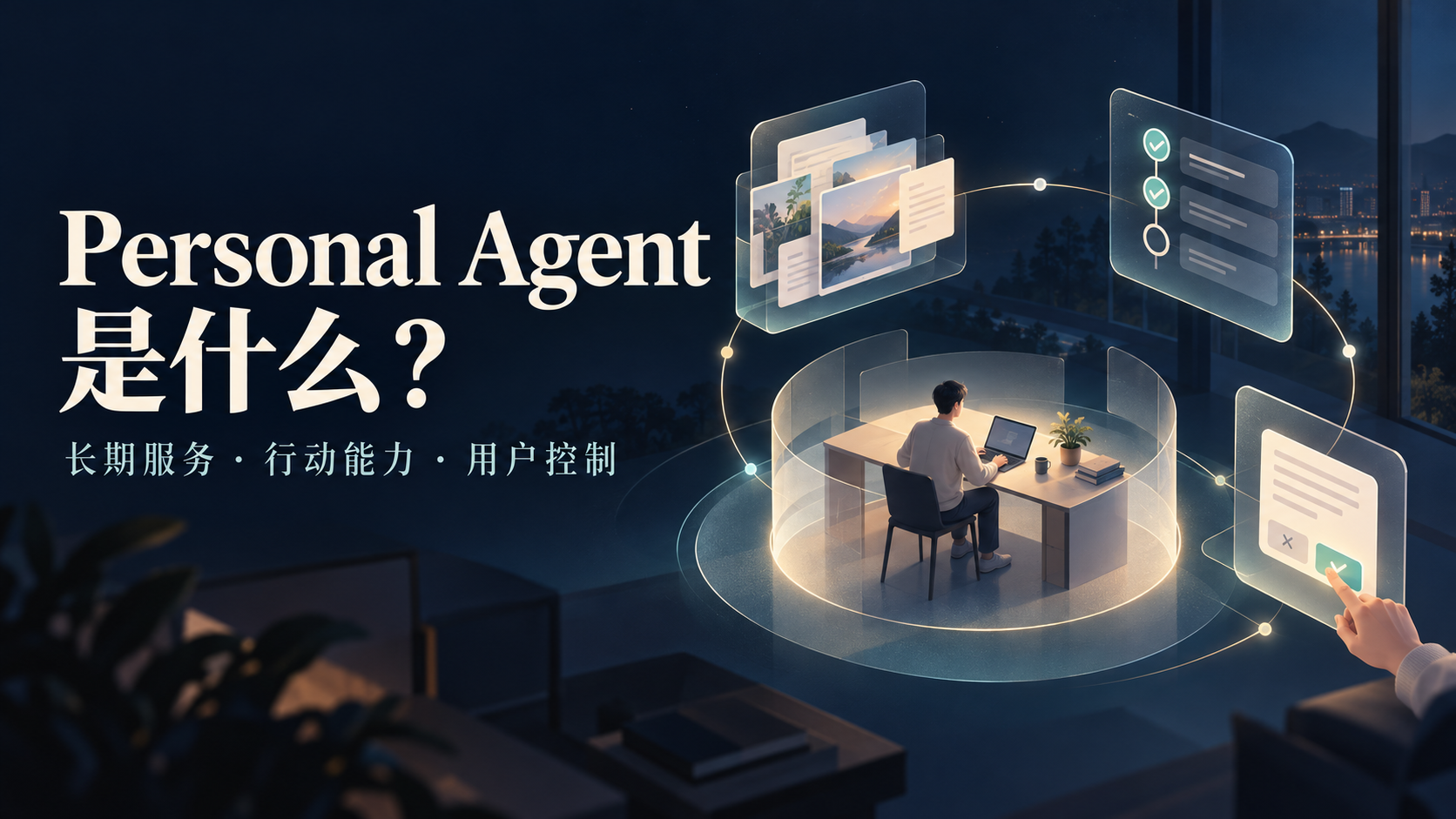
As AI begins to remember our preferences, follow up on goals, and even use tools, a question becomes more concrete: what do we want it to help us with over time?
This article uses a working definition: a Personal Agent is an AI system that provides continuing assistance to a particular user, maintains necessary personal context, and advances tasks within agreed boundaries. This is a framework for discussion, not a universal industry standard. Existing capabilities, design goals, and observed results should be distinguished.
01From an Answer to What Happens Next
Imagine saying, “I'd like to tidy the balcony, but Sunday is my only free day this week.” A one-off answer might offer organizing tips. Continuing assistance must also consider whether Sunday is still free, what was done last time, which suggestions were unsuitable, and whether a reminder is welcome.
These questions involve maintaining state, advancing tasks, and respecting interaction boundaries. Describing a plan is different from carrying it forward, recording the outcome, and handling failure.
Architecture deserves the same care. Anthropic's guide to building agents distinguishes predefined workflows from systems in which a model dynamically directs its process and tool use.[1] This helps analyze implementations, but it is not a complete definition of a Personal Agent.
02Four Questions to Ask About a Product
Can it carry context forward? Saving information is only part of the problem; provenance, timeliness, and correction matter too. A meal choice on one business trip should not automatically become a permanent preference.
How far can it advance a task? Giving advice, preparing a draft for confirmation, setting reminders, and operating external applications should be described separately. A tool interface does not guarantee task completion.
Which boundaries can the user control? Examples include what may be saved, which actions require confirmation, and how to pause a task. The key is that users can understand and use those controls.
How does it explain problems? Missing sources, failed execution, or expired permissions need visible status and ways to recover. These are experience measures we suggest examining, not universal qualification criteria.
03Personality, Memory, and Execution Can Be Discussed Separately
Some people prefer an AI with a consistent character and style; others want a concise tool. Relationship experience and task capability can develop together without choosing one form for everyone.
Multi-agent systems, background scheduling, and dedicated cloud computers are architectural choices. They should be judged against the task, available resources, and reliability needs, rather than by counting agents or tools.
MCP is an open standard for connecting AI applications to external systems.[3] A protocol connection alone does not establish safe permissions, appropriate information use, or reliable outcomes.
04Proactive Service Needs Clear Timing and Scope
Reminding someone about a goal and sending a message on their behalf have different consequences. Reading information also requires appropriate authorization; privacy does not disappear just because external data is not modified.
Simon Willison discusses data-exfiltration risks when access to private data, untrusted content, and external communication are combined.[2] For a Personal Agent, this suggests that instructions in external documents should not automatically become authorization, and tools need clear scopes.
Risk-based confirmation, limits on available tools, and records of outcomes are control approaches we recommend considering; their effectiveness still requires validation.
05How Can a User Choose?
Try a small real task. Does the system understand your constraints, explain what it will do, deliver a result you can inspect, and make mistakes easy to correct?
The value of a Personal Agent must be tested in such continuing tasks. Product claims can explain a direction, but long-term experience determines whether it suits you.
06References
- Anthropic. Building effective agents. 2024-12-19.Accessed 2026-10-29.
- Simon Willison. The lethal trifecta for AI agents: private data, untrusted content, and external communication. 2025-06-16.Accessed 2026-10-29.
- Model Context Protocol. What is the Model Context Protocol (MCP)?Accessed 2026-10-29.